

Published by Cartel DocsAbout 14 minutes to read
Investigations
Contents
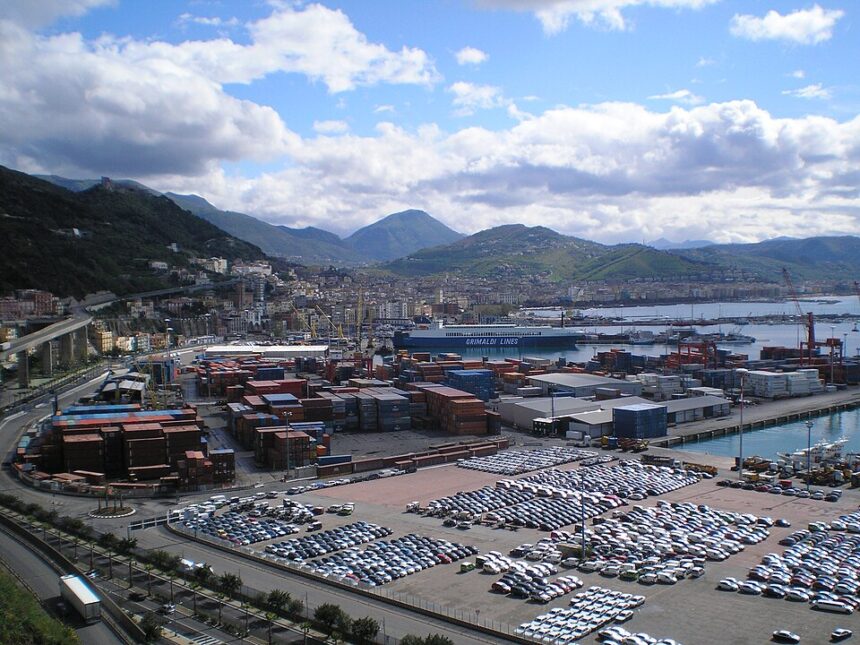
When Italian customs officers pried open three commercial cargo containers inside the sun-baked port of Salerno on June 29, 2020, they uncovered an industrial masquerade: towering, two-meter-high rolls of multilayered kraft paper, wound so tightly they seemed built to feed a printing press[1],[5]. Yet tucked inside the hollow core of those dense cardboard cylinders lay fourteen tonnes of small, off-white tablets stamped with two interlocking crescent moons—eighty-four million pills of Captagon, representing the single largest synthetic drug seizure in global history[1],[5]. Two days later, commanders of the Guardia di Finanza stepped before television cameras to announce an immediate culprit, proclaiming that the €1 billion haul had been manufactured and dispatched by the Islamic State to bankroll international terror[1]. It was a sensational, cinematic narrative that pinned an unprecedented crime on the world’s most reviled terrorist brand[1]. But the tablets carried a very different origin[2],[8]. As European magistrates dug beneath the logo, tracing shipping routes backward through Greece, Romania, and Germany, the trail led away from jihadist desert hideouts and straight into the sovereign maritime gates of Latakia, exposing an industrial narco-state run by the Syrian regime of Bashar al-Assad, guarded by his military’s elite Fourth Division, and facilitated by commercial proxies tied to Hezbollah[3],[8],[13].
The attribution to ISIS gave an enormous drugs seizure an immediately recognizable enemy[1]. It also established the question that would follow the case for years[8]. The pills were real[1]. The people who had arranged their manufacture, packing, transport and onward movement had to be identified through other evidence[8]. When investigators began connecting those activities, the emerging account pointed toward intermediaries and business networks associated with the Syrian government that ISIS had fought[1],[8].
The first challenge arrived almost immediately[2]. Reporting carried by Arab News on 5 July relayed a Sunday Times account involving Syrian business figures with regime connections[2]. An unnamed paper-industry businessman questioned the logistics: how would ISIS obtain the industrial and port access necessary for such a shipment?[2] It was an argument about the machinery of commerce[2]. Who could actually arrange this cargo?[2]
A logo is not a signature
Captagon was an especially convenient name for a misleading story because it already carried a mythology[17]. Images of pills, armed fighters and the Syrian war had become entangled[17]. Yet researchers at the European drug agency had warned before Salerno that an apparent visual clue could be badly misread[17]. Syringes visible in footage connected with the Paris attacks had been used for forensic work; they were wrongly interpreted as evidence that attackers had injected drugs[17].
The Salerno tablets offered a different kind of evidence[12]. An EMCDDA and German Federal Criminal Police Office report described their contents as amphetamine and caffeine, rather than the original pharmaceutical formulation associated with the Captagon name[12]. Laboratory analysis could identify substances[12]. It could not, by itself, identify the political allegiance of the people who commissioned them[12].
The distinction became more important as production spread[21]. A New Lines Institute review of the trade from 2015 to 2023 warned that packaging, branding and chemical composition alone were increasingly insufficient to establish origin[21]. A familiar logo could travel farther than the organization that had first become associated with it in public imagination[21]. For investigators, the useful question was therefore not simply what mark appeared on a tablet, but which relationships had carried millions of tablets across borders[21].
Journalist Christoph Reuter drew another distinction in a 2023 CSIS interview: claims about fighters consuming stimulants were different from evidence about manufacturing and exporting them[27]. He rejected the Salerno attribution to ISIS[27]. The two stories could sound similar when compressed into a headline, but they required different investigations—one into consumption, the other into an industrial supply chain[27].
Researcher Caroline Rose approached the initial claim through capacity[7]. In European View, she argued that ISIS’s territorial and logistical losses made it a weak explanation for an operation on this scale[7]. Her analysis redirected attention toward the infrastructure needed to move the cargo and toward Europe as a possible transit point for drugs serving established demand elsewhere[7].
The people who could move the containers
The Italian inquiry brought the story down to a different scale: people arranging transport, contacts with shipping businesses, payments and conversations[6]. Alberto Eros Amato became a central defendant[6]. In reporting by Domani and Mediapart, he acknowledged knowing Syrian businessman Taher al Kayali while denying knowledge of what the containers actually held[6]. He said the last cargo was intended for Libya[6]. Knowing a business contact and knowingly handling drugs were the very different propositions his case turned on[6].
Investigators pursued that difference through intercepted communications and banking checks, including payments involving transport companies and customs agents[6]. Such work did not produce the instant clarity of a warehouse full of tablets[6]. It reconstructed decisions: who contacted whom, who arranged a service, who paid, and what those actions suggested about knowledge[6]. The reporters also described the difficulty of following the inquiry into Syria and Libya[6]. The commercial chain crossed jurisdictions more easily than investigators could[6].
Al Kayali’s name had appeared in another maritime investigation[4]. OCCRP traced the Noka, which left Latakia in December 2018 and was intercepted near Crete[4]. Its reporting drew on court documents, company records, ship movements and interviews[4]. Al Kayali denied drug involvement and said he had rented the vessel to another company[4]. This was a separate cargo and case, but it put a businessman connected with maritime transport into an already developing investigative picture[4].
Two years after the Salerno seizure, cooperation with Germany offered Italian investigators another way into that picture[18]. Spiegel described a Romanian seizure leading investigators toward suspects in Essen[18].
In April 2022, Italian investigators interviewed a suspect in Essen[8]. The Salerno prosecution later described the resulting material as significant to its inquiry[8]. By February 2023, it was publicly outlining a suspected network close to Syrian authorities, with useful contacts at Latakia[8]. The route from a seized container to that hypothesis ran through testimony and cooperation between prosecutors, rather than through the Captagon logo[8].
The practical importance of Latakia was not merely its place on a map[3]. A New Lines Institute study described access to state infrastructure and military protection as advantages enjoyed by regime-connected business actors[3]. It also associated Abdellatif Hamid with a factory said to have produced the paper rolls used in the Salerno shipment[3]. Packaging, in this account, was part of the chain of responsibility investigators needed to reconstruct[3].
The same study criticized the exclusive association of Captagon with ISIS for obscuring other participants in the trade and other groups of consumers[3]. Salerno showed why that mattered: an explanation fixed on a terrorist brand could leave less recognizable businessmen, service providers and protectors outside the frame[3],[8]. Those were precisely the kinds of actors the developing investigation was bringing into view[3],[8].
Ten years, and a narrower answer
Amato’s case produced a judicial outcome[9]. The first-instance ruling was issued on 7 February 2022[9]. The Salerno appeal court confirmed it on 11 October: ten years in prison and a €36,000 fine[9]. Italy’s Court of Cassation subsequently rejected his appeal, with its judgment deposited on 29 August 2023 following a May hearing[9]. The case concerned illicit possession, jointly with others, of large drug consignments transiting Salerno from Syria[9]. It was not a conviction for financing ISIS[9].
His defense challenged the inference that he knew the cargo was illicit and disputed aspects of the evidence[9]. Cassation found the appellate reasoning adequate[9]. That did not turn every allegation about the wider Syrian industry into a finding against every named participant[9]. It did establish a criminal outcome for an identified intermediary, beyond the seizure announcement’s sweeping attribution[9].
Other positions in the case remained different[6],[8]. A February 2023 prosecution release announced a detention order against al Kayali as a suspected sender and explicitly preserved the presumption of innocence[8]. It described Apicella’s trial as ongoing at that time[8]. Al Kayali had denied that either he or his company had anything to do with drug trafficking[6]. A conviction, a suspect’s warrant and a denial belonged in the same story without becoming the same legal result[6],[8].
Different people, different procedural positions
The Italian proceedings described in the article.
The quantities also required disentangling[5],[8]. The extraordinary 84-million-tablet seizure was one of two major June hauls[5]. Italy’s anti-drug directorate recorded roughly 14,191 kilograms of amphetamine across the two operations; the prosecution’s combined account also included hashish[5],[8]. Adding those drugs together produced a total exceeding 17 tonnes[8]. It did not mean that the principal Captagon shipment had grown from 14 to 17 tonnes[5],[8].
Those seizures distorted the annual statistics as well as the headlines[5]. The Italian directorate attributed an enormous increase in synthetic-drug seizures to the exceptional hauls and assessed the main consignment as probably intended for foreign markets[5]. A sudden rise in drugs intercepted in Italy was therefore not automatically a sudden rise in Italian consumption[5].
Seen from the Gulf, the geography looked different[2],[11]. UNODC’s account placed Syria and Lebanon among reported origins and Gulf states among principal destinations, with European locations appearing along the transit chain[11]. Salerno could be an intermediate stop rather than the market that justified production[11]. That changed the interpretation of the port: a place where investigators could interrupt a distant business, even when the intended consumers were elsewhere[11]. The uncertainty about the final destination was present in reporting within days of the seizure, alongside competing suggestions of Europe, North Africa and the Gulf[2],[11].
The factory allegation
In March 2023, the United States made a much more specific allegation about the origin of the tablets[13]. Treasury attributed the 84 million pills seized at Salerno to a factory owned by Samer Kamal al-Assad, a cousin of Syria’s president[13]. It alleged that Samer coordinated production facilities with the Fourth Division and certain Hezbollah associates[13]. Here was a named producer, a particular shipment and an asserted relationship to military and allied networks[13].
The British announcement, issued as part of coordinated action, identified another role: Abdellatif Hamid’s factories packaging Captagon, linked to the Salerno seizure[15]. It also designated al Kayali over alleged connections with the industry and multiple seizures[15]. The American factory allegation and British packaging allegation described different functions[13],[15]. Together they offered a more concrete account than the original ISIS label, while remaining sanctions allegations rather than an Italian verdict against those Syrian figures[13],[15].
The attribution became more specific
From a broad announcement to named alleged functions.
Italian authorities initially named Islamic State. [1]
Treasury linked the tablets to Samer al-Assad’s factory. [13]
Britain named Hamid’s factories in connection with the shipment. [15]
The European Union followed in April 2023 with designations of 25 individuals and eight entities, most connected in its assessment with narcotics production and trafficking[23]. The political response had moved toward named commercial and regime-linked actors[23]. Captagon was being addressed as an industry sustained by relationships, not simply as a drug bearing a terrorist reputation[23].
Hezbollah’s secretary-general Hassan Nasrallah publicly denied the organization’s involvement in narcotics smuggling in May 2023[25].
The public suspicion had evolved over time[26]. In December 2020, an unnamed Italian finance-police source told Arab News that the seizure could have a Hezbollah connection, while emphasizing that the investigation continued[26]. Former anti-mafia chief prosecutor Franco Roberti argued that a shipment of such value could not have arrived without mafia knowledge[26]. Both statements pointed toward questions about facilitation and protection; neither identified every owner or customer[26].
The broader European case compilation complicated the mafia explanation[1],[12]. The EMCDDA and German police report did not find a significant EU consumer market and cautioned against assuming routine involvement by established European drug networks[12]. Specific intermediaries could be prosecuted without proving that the shipment belonged to a continent-wide criminal consortium[12]. The initial announcement’s Camorra hypothesis was one proposed explanation, not a substitute for tracing participants[1],[12].
Protection without a single proprietor
The Syrian trade itself resisted a simple organizational diagram[14]. Research by New Lines on the Fourth Division described a model in which the military formation could allow other actors to produce and sell while controlling markets and routes[14]. That is a different arrangement from one organization owning every factory and every shipment[14]. Protection, access and permission could create value without requiring a single proprietor for the entire trade[14].
Mohanad Hage Ali’s later Carnegie study similarly described networks crossing political affiliations and drawing collaborators from different parties and security services[16]. Such an account does not erase specific allegations against Hezbollah associates[16]. It explains why a search for one organizational label can miss the relationships that make an illicit business function[16]. The useful connections are the ones attached to identifiable actions[16].
Scale made those relationships consequential[11],[20]. UNODC treated the size of major seizures as evidence consistent with industrial production[11]. The World Bank subsequently distinguished an estimated annual market value of Syrian-origin Captagon reaching $5.6 billion in 2020–23 from estimated profits of up to $1.8 billion for actors based in or linked to Syria[20]. Those were different measures, neither a statement of the proceeds from Salerno nor a quantified payment to Hezbollah[11],[20].
The money also complicated diplomacy[10]. INSS researchers Carmit Valensi and Tal Avraham described Jordan’s frustration with efforts to secure cooperation from Damascus and argued that Syrian anti-trafficking publicity concealed continuing interests in the trade[10]. Their July 2024 analysis captured the problem confronting neighboring governments: asking a state to suppress a business in which powerful people around it had stakes[10].
Rose’s European View analysis described the drug as leverage in regional normalization negotiations[7]. A problem crossing a border could become an argument for renewing relations with the government on the other side[7]. The same industry that brought police to containers in Europe could bring diplomats back to Damascus[7]. By that stage, the consequences of identifying its sponsors extended well beyond the prosecution of a shipping intermediary[7]. They affected whom neighboring states believed they needed to bargain with, and what cooperation they hoped to obtain[7].
Hesham Alghannam, writing for Carnegie, added another obstacle[29]. Even a willing Assad government would have struggled with an extensive, fragmented network of actors pursuing their own incentives[29]. Negotiation with the president could not automatically settle the interests of every militia, businessman or intermediary[29]. Identifying regime links was therefore important, but it did not establish a simple switch that diplomacy could turn off[29].
Washington’s 2023 strategy reflected a practical distinction that the original Salerno announcement had blurred[30]. It separated the US military campaign against ISIS from efforts against Captagon production and distribution, excluding a military operation against the latter inside Syria[30]. Instead, it proposed investigations supported by intelligence, financial measures, training and diplomatic pressure[30]. Naming the network correctly affected which instruments governments chose to pursue it[30].
What survived the seizure
The difficulty outlasted Assad’s government[28]. After its fall, industrial laboratory seizures exposed chemical inputs and equipment that helped fill gaps in knowledge, according to Caroline Rose’s EU-ACT assessment[28]. The same report emphasized limited routine forensic testing[28]. New discoveries could improve understanding of production without retrospectively assigning every old consignment to a particular factory[28]. Salerno still required its own chain of evidence[28].
Hage Ali warned in March 2025 that Assad’s fall and Hezbollah’s weakening would not necessarily end a business with continuing demand and surviving production capacity[16]. The political landscape could change faster than the commercial incentive[16]. That forecast returned the story to the distinction investigators had confronted at Salerno: naming a powerful organization was only the beginning of understanding which people, facilities and relationships allowed drugs to move[16].
Nor could the trade’s trajectory be read from one spectacular haul[19],[22]. New Lines’ review of 2024 recorded more seizures by count but a lower total volume of pills[22]. More operations and fewer intercepted tablets could occur together[22]. Economist Karam Shaar offered a related warning about enforcement: where demand remained, pressure on one production area could displace supply rather than extinguish it[19],[22].
Even explanations proved difficult to dislodge[19]. Shaar’s Atlantic Council article analyzed regime-linked production, yet the photograph’s caption repeated the old attribution of the Salerno pills to ISIS[19]. The mismatch preserved two different accounts on the same page[19]. A headline could be challenged by years of investigation and still survive in the small print attached to an image[19].
The tablets themselves had a less ambiguous destination[8],[13],[24]. At dawn on 17 December 2020, two articulated trucks reached an incineration facility in Ravenna carrying the seized drugs for destruction, ANSA reported[24]. By then, the original attribution was already being questioned[24]. The criminal proceedings, the German interviews and the named sanctions allegations were still ahead[8],[13]. The cargo had completed its final journey; the work of identifying the people behind it had not[8],[13],[24].
Sources
- Rai News, record Salerno seizure, 1 July 2020
- Arab News, Assad business figures linked to record Captagon pill seizure, 5 July 2020
- New Lines Institute, The Captagon Threat, April 2022
- OCCRP, Greek Captagon Bust Leads to a Criminal Gang and the Port at the Heart of Syria’s Booming New Drug Trade
- Italian DCSA, Annual Report 2021, data for 2020
- Sara Creta, Tomas Statius and Giovanni Tizian, Domani/Mediapart investigation,18 July2022
- Caroline Rose,The reach of the trade in Captagon beyond the Middle East,European View2023
- Salerno prosecution press release reproduced by StileTV,17February2023
- Corte di cassazione,Fourth Section judgment35896/2023
- Carmit Valensi and Tal Avraham,Captagon:Assad’s Economic Lifeline and Diplomatic Card,INSS1879,21July2024
- UNODC,World Drug Report2022 Booklet4
- EMCDDA/BKA,Captagon trafficking and the role of Europe,September2023
- US Treasury,28March2023 Syrian and Lebanese Captagon designations
- Annsar Shahhoud and Muhanad Abulhusn,Syria’s Parastate:The4thDivision,NewLinesMarch2023
- UK Foreign Office,Tackling the illicit drug trade fuelling Assad’s war machine,28March2023
- Mohanad Hage Ali,Double Dealers:Lebanon and the Risks of Captagon Trafficking,Carnegie19March2025
- EMCDDA,Captagon:understanding today’s illicit market,2018
- Diehl,Alnajjar and Reuter,The Assad Regime Would Not Survive Loss of Captagon Revenues,Spiegel21June2022
- Karam Shaar,No quick fixes for the Middle East’s captagon crisis,Atlantic Council
- World Bank,Syria Economic Monitor2024
- NewLines,The Captagon Trade from2015to2023,May2024
- NewLines,Captagon in2024,2025briefing
- Council of EU,24April2023 Captagon-related designations
- ANSA,16tonnellate di droga distrutte dalla Gdf diNapoli,17December2020
- Reuters,Maya Gebeily,Hezbollah denies links to drug kingpin killed inSyria,12May2023
- Francesco Bongarra,Italian police:Record-breaking drugs bust could haveHezbollahlink,ArabNews26December2020
- CSIS Babel,ChristophReuter:Syria’s WarEconomy,13June2023
- Caroline Rose, EU-ACT strategic assessment of Captagon and methamphetamine, 2026
- Hesham Alghannam, Border Traffic: How Syria Uses Captagon to Gain Leverage Over Saudi Arabia, Carnegie, 9 July 2024
- US State Department, Report to Congress on a strategy against Assad-linked narcotics networks, 29 June 2023


